
Exhibition presented by Carole Jeanneret
from the "Open Book" workshop
24 Rue de Lausanne in Fribourg
"The mission of the conservator/restorer: what if your books could last another 100 years?"
From June 3 to 27, 2026 at L'Atelier, Place Notre-Dame 16 in Fribourg

Human factors
and animals

Manipulation
The handling of books and archival documents is an often underestimated, yet ubiquitous, factor in their deterioration. Any inappropriate contact or movement can cause mechanical damage, sometimes immediate, sometimes gradual, but always likely to permanently alter the physical and documentary integrity of the works.
These damages can be unintentional . They result from inappropriate handling, a lack of training or attention, or inadequate consultation conditions. Among the most frequent alterations are tears, creases, binding breaks, crushed headcaps, and detached fragments. Repeated handling, even with care, can also cause gradual wear of the materials, particularly in high-traffic areas such as corners, hinges, and the pages at the beginning and end of the volume.
Handling errors include, in particular, pulling a book by its spine, forcing a volume open, using unsuitable supports, or leafing too quickly through fragile pages. The loss of documents, whether due to poor management, incorrect filing, or uncontrolled movement, also constitutes a form of damage, as it directly compromises the integrity of the collections.
Furthermore, some damage results from deliberate acts such as theft, mutilation, or vandalism. These can range from simply removing pages or illustrations to more significant deterioration, motivated by malicious intent or a lack of awareness of the documents' heritage value.
Given these risks, implementing preventative measures is essential. This relies in particular on training professionals and users in proper handling practices, the use of appropriate supports (lecterns, reading cushions), and on monitoring and security systems for the collections. Supervising consultations and raising public awareness also help to limit inappropriate behavior.
Thus, handling, whether occasional or repeated, is a major issue in preventive conservation. Constant attention and appropriate practices significantly reduce the risk of mechanical damage and ensure the long-term preservation of documents.
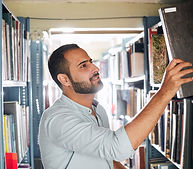
Storage
This, along with books and archival documents, constitutes a fundamental element of preventive conservation. Inappropriate storage, overcrowding, or storage in an unfavorable environment can promote the onset and worsening of numerous forms of deterioration, whether mechanical, chemical, or biological.
Improper storage or inadequate placement on shelves can put physical stress on books. Books that are too tightly packed are difficult to handle safely, increasing the likelihood of tears, detachments, or binding deformation. Conversely, books that are not adequately supported can sag, warp, or experience structural strain. Large-format books, in particular, require flat storage or appropriate support to prevent deformation.
Packaging materials also play a crucial role. Using unsuitable, acidic, or unstable containers can accelerate degradation processes. Conversely, storage boxes, folders, or dividers made from neutral and acid-free materials help protect documents from external factors such as light, dust, or climatic variations.
Furthermore, the storage area must offer stable and controlled environmental conditions. Inappropriate temperature and relative humidity, as well as poor ventilation, promote mold growth, insect activity, and chemical degradation. Proximity to heat sources, light, or pollutants also constitutes a significant risk factor.
Finally, the organization of storage has a direct impact on preservation. Clear and rigorous filing limits unnecessary handling and reduces the risk of loss or damage. It also facilitates access to documents while ensuring their security.
Therefore, proper storage relies on a balance between good environmental conditions, the choice of appropriate materials, and rigorous organization of collections. It is one of the essential levers for ensuring the long-term preservation of books and archival documents.

Insects and other animals
Biological infestations, particularly those caused by insects and small animals, pose a significant threat to the preservation of books and archival documents. Certain insects, known as xylophagous or, more broadly, keratophagous and cellulosivorous , feed on wood or organic materials found in collections, such as paper, glues, leather, or textiles. High humidity, poor air circulation, accumulations of dust and dirt, and the absence of noise and vibration all contribute to insect growth.
Among the most frequently encountered species are the furniture beetle, which bores galleries in the wood of bookshelves or bookbindings; the silverfish, attracted to starch and glues; and booklice, which thrive in damp environments and feed on microorganisms present on the surface of materials. Termites, although less common in some contexts, can cause considerable damage by directly attacking wooden structures and paper. Cockroaches, for their part, consume various organic materials and leave behind traces and droppings that damage documents.
These insects cause various types of damage: perforations, galleries, surface abrasions, weakening of supports, as well as stains that are difficult to remove. Their presence is often favored by unsuitable environmental conditions, including high relative humidity, excessive temperature, or poor hygiene in storage areas.
Other animals such as rats, mice, and bats can also cause significant damage. Rodents gnaw on materials to find food or to build their nests, resulting in substantial material losses. Their droppings and urine are also sources of biological and chemical contamination. Bats, while less directly destructive to the materials, can contaminate collections with their excrement and create conditions conducive to the growth of microorganisms.
Preventing these infestations relies on regular monitoring, maintaining stable and suitable climatic conditions, and ensuring good hygiene in storage areas. Implementing detection systems, such as insect traps, and controlling access help limit the risk of infestation. If an infestation is confirmed, appropriate treatments must be carefully implemented to avoid further damage to the documents.

External elements
They constitute risk factors for the preservation of books and archival documents, due to their often unpredictable nature and the extent of the damage they can cause. These threats include, in particular , fires, floods, earthquakes, structural collapses, and armed conflicts.
Fires represent one of the most destructive risks, leading to the total or partial combustion of documents, as well as damage caused by heat, smoke, and soot. Even when collections are not directly consumed, the deposits of particles and gases from combustion can cause significant chemical degradation.
Floods, whether caused by natural disasters, water seepage, or technical failures, expose documents to water, leading to swelling, deformation, dissolution of inks and adhesives, and rapid mold growth. Water damage is often exacerbated by inadequate or excessively slow drying conditions.
Earthquakes and collapses can cause shelving to fall, documents to be crushed, and collections to be disorganized. These events also cause structural damage to buildings, making storage conditions unstable and exposing works of art to further risks.
Armed conflicts and wartime situations also pose significant threats, due to direct destruction, fires, looting, or forced displacement of collections. These contexts considerably increase the risks of loss, dispersal, or irreversible deterioration of documentary heritage.
Faced with these risks, implementing preventative measures and emergency plans is essential. This includes assessing building vulnerabilities, installing appropriate security devices, and preparing intervention protocols to ensure a rapid response in the event of a disaster and minimize losses.
Let's work together
Contact us so we can work together.


